
If you have an exposed aggregate driveway or patio, you know the struggle. Dirt, moss, and oil stains settle deep into the rough surface, making a standard garden hose useless. A pressure washer can blast that grime away, but the wrong one can dislodge the pebbles or etch the concrete. This guide covers the best pressure washer for exposed aggregate, focusing on models that deliver the right balance of power and control for delicate surfaces. Whether you need a gas-powered beast for large areas or a quiet electric unit for regular maintenance, we have you covered.
For a deeper look at electric options, check out our guide to top medium duty electric pressure washers for 2026.




Buying Guide
Pressure and Flow Rate
For exposed aggregate, you need enough pressure to remove embedded dirt without damaging the surface. Aim for at least 3000 PSI and 2.0 GPM. Higher flow rates help rinse away debris faster, reducing the risk of etching from prolonged spray on one spot.
If you prefer gas power for heavy-duty cleaning, read our best gas cold water pressure washers guide.
Nozzle Versatility
A wide spray angle (40 degrees or more) is essential for aggregate to avoid concentrated jet streams that can pop out stones. Look for models with multiple quick-change nozzles, including a turbo nozzle for tough stains and a soap nozzle for chemical cleaning.
Surface Cleaner Attachment
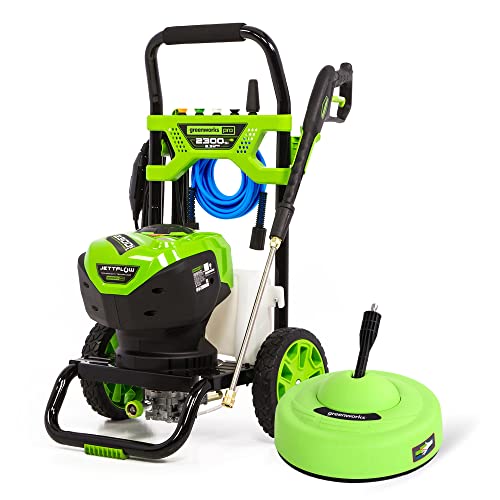
A surface cleaner attachment is a game-changer for exposed aggregate. It distributes water evenly, prevents streaking, and covers large areas quickly. Many pressure washers in this guide come with or are compatible with surface cleaners.
For a comparison of electric models with surface cleaners, see our westinghouse ePX3100v vs RYOBI article.
Hose Length and Mobility
A longer hose (25 feet or more) reduces the need to move the machine constantly, which is especially helpful on large driveways. Pneumatic tires and a sturdy frame make it easier to roll over uneven aggregate surfaces.
If you need a unit that works with a water tank, check our best electric pressure washer with water tank guide.
Final Thoughts
For exposed aggregate, the Greenworks 3000 PSI (2.0 GPM Max) offers the ideal pressure and flow rate for safe, effective cleaning, while the 4200 PSI 4.0 GPM Gas Pressure Washer provides the raw power needed for heavy-duty jobs like stripping moss and oil stains. Choose based on your surface area and cleaning frequency.
Frequently Asked Questions
Can I use a pressure washer on exposed aggregate without damaging it? Yes, if you use a wide spray nozzle (40 degrees or wider) and keep the wand moving. Avoid concentrated jets and maintain a distance of at least 12 inches from the surface.
What PSI is safe for exposed aggregate concrete? A pressure range of 3000 to 3500 PSI is generally safe when used with a surface cleaner or wide nozzle. Higher pressures like 4200 PSI can be used with care, but a surface cleaner attachment is recommended to distribute force evenly.
Should I use a gas or electric pressure washer for exposed aggregate? Electric models are quieter and lighter, ideal for regular maintenance. Gas models offer higher pressure and flow for deep cleaning of large areas. Both work well, but gas units require more upkeep.
How often should I clean exposed aggregate with a pressure washer? For most homes, once or twice a year is enough. If you live in a damp area with moss growth, you may need to clean every six months. Avoid over-washing, as it can wear down the surface over time.