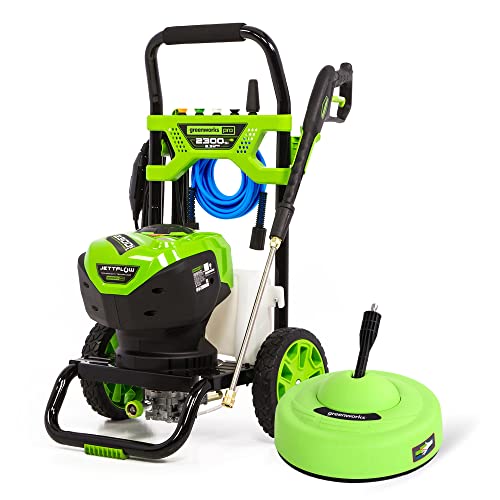

You have a dirty driveway, a grimy fence, or a mud-caked patio. You want a pressure washer that starts instantly, cleans powerfully, and doesn’t require a gas can. That is where the Greenworks 3000 PSI brushless models come in. This guide reviews the top Greenworks brushless electric pressure washers, focusing on the 3000 PSI options and their unique benefits. Whether you need heavy-duty cleaning or light maintenance, we help you find the perfect fit. For more context on choosing the right machine, see our guide on how to choose a pressure washer.


Buying Guide
Power and Performance
PSI and GPM are the core metrics. Higher PSI means more pressure for tough grime, while higher GPM means faster rinsing. The Greenworks 3000 PSI (2.0 GPM Max) models deliver a strong balance for residential tasks like cleaning driveways and decks. For lighter jobs, the Greenworks 1700 PSI (1.2 GPM) is sufficient for cars and patio furniture. Always consider the cleaning units (CU) for a complete picture.
Motor Technology
Brushless motors are more efficient and durable than brushed motors. Greenworks uses TruBrushless technology in their higher-end models. This motor automatically adjusts power based on the nozzle you use. It provides consistent cleaning force and extends the lifespan of the machine. For a deeper look at electric vs. gas options, read our article on whether an electric pressure washer is worth it.
Pump Design and Durability
The pump is the heart of any pressure washer. Greenworks uses a heavy-duty cast aluminum axial cam pump in their 3000 PSI models. This design is built to handle high pressure and resist wear. It offers better than gas performance in a lighter, more compact package. For a comparison with other electric models, check our review of the Westinghouse WPX3000E electric pressure washer.
Hose and Accessories
A long, kink-resistant hose makes a big difference. The Greenworks 3000 PSI models include a 25-foot Uberflex hose that resists tangles. They also come with a rugged metal gun and multiple spray tips (15°, 25°, 40°, soap, and turbo). These accessories let you adjust the spray pattern for different cleaning tasks. For a complete list of electric pressure washers, visit our electric pressure washers category page.
Final Thoughts
For most homeowners, the Greenworks 3000 PSI (2.0 GPM Max) is the standout pick. It combines powerful cleaning with a brushless motor and durable pump, making it ideal for heavy-duty tasks like stripping paint or cleaning concrete. If you need a more budget-friendly option for lighter jobs, the Greenworks 1700 PSI (1.2 GPM) is a solid choice for cars, windows, and patio furniture. Both models offer the convenience of electric starting and low maintenance.
Frequently Asked Questions
Is the Greenworks 3000 PSI brushless pressure washer better than gas?
For many residential users, yes. It delivers comparable cleaning power without the noise, fumes, or maintenance of gas engines. It starts instantly and is lighter to move around. However, gas models may still have an edge for continuous heavy use.
What is the difference between the two Greenworks 3000 PSI models?
Both models share the same core specs: 3000 PSI and 2.0 GPM with a TruBrushless motor. The main difference is the included accessories and slight design variations. One model may come with a different hose or spray tips. Check the product details for the exact package.
Can I use a Greenworks electric pressure washer with a standard garden hose?
Yes, all Greenworks electric pressure washers connect to a standard garden hose. Ensure your hose has a standard fitting and that the water supply is turned on before starting the machine. For a step-by-step setup, see our guide on how to use a pressure washer.
How long does the brushless motor last in these pressure washers?
Brushless motors are very durable and often last for hundreds of hours of use. They have fewer moving parts than brushed motors, which reduces wear. With proper maintenance, including storing the unit in a frost-free area, the motor should last for many years.