
Imagine staring at a driveway stained with oil, a deck covered in moss, or siding streaked with grime. An electric washer might handle light chores, but for serious cleaning, you need the raw power of gas. This guide reviews the top gas powered pressure washers of 2026, helping you choose a machine that can blast away the toughest dirt. We’ve evaluated models from trusted brands like Simpson, Westinghouse, and DEWALT, focusing on PSI, GPM, engine quality, and durability. Whether you’re a homeowner tackling weekend projects or a contractor needing professional-grade equipment, we have you covered.
In this comprehensive review, we break down each product’s strengths and ideal use cases, so you can make an informed decision. If you’re also curious about electric alternatives for lighter tasks, check out our guide to the best pressure washers for car cleaning.




Buying Guide: What to Look for in a Gas Pressure Washer
Choosing the right gas pressure washer goes beyond just picking the highest PSI. Here are the key factors we considered in our evaluation.
Pressure (PSI) and Flow Rate (GPM)
PSI (pounds per square inch) measures the water pressure, while GPM (gallons per minute) indicates the water flow. Together, they determine cleaning power. For most residential tasks, 3000 to 3500 PSI with 2.5 GPM is sufficient. For heavier jobs like stripping paint or cleaning large concrete areas, consider models with 4000 PSI or higher, such as the 4200 PSI 4.0 GPM Gas Pressure Washer from IvyBess.
Remember, higher PSI isn’t always better; you need to match the pressure to the surface to avoid damage. For delicate surfaces like cars or wood, a lower pressure setting or a wider nozzle is essential.
Engine and Pump Quality
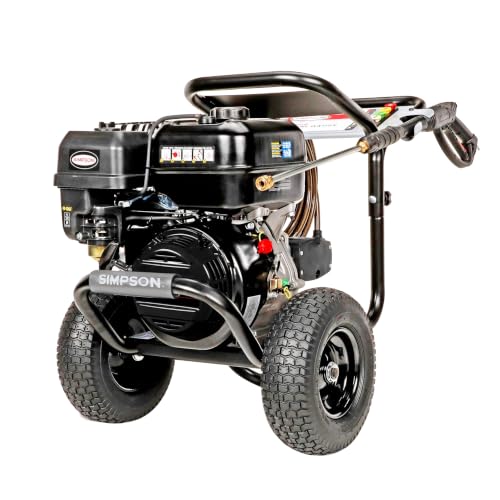
The engine drives the pump, and the pump generates the pressure. Look for reliable engines from brands like Honda, or proven OHV engines from Westinghouse or Simpson. A high-quality pump, such as an axial cam pump or a triplex pump, ensures longevity and consistent performance. The Simpson PowerShot 4400 PSI Gas Pressure Washer features an AAA industrial triplex pump, which is a top choice for professionals.
Consider maintenance requirements. Many axial pumps are maintenance-free, while triplex pumps may require occasional oil changes but offer superior durability.
Portability and Build Quality
You’ll be moving the washer around your property, so sturdy wheels and a solid frame are crucial. Look for models with pneumatic or never-flat tires, and a welded steel frame that resists corrosion. The Ezasin Gas Powered Pressure Washer 3500 PSI features 10-inch tires and a robust frame, making it easy to maneuver.
Also, check the hose length and storage options. A 25-foot hose is standard, but some models offer longer reach. Onboard storage for nozzles and the spray gun keeps everything organized.
Nozzles and Accessories
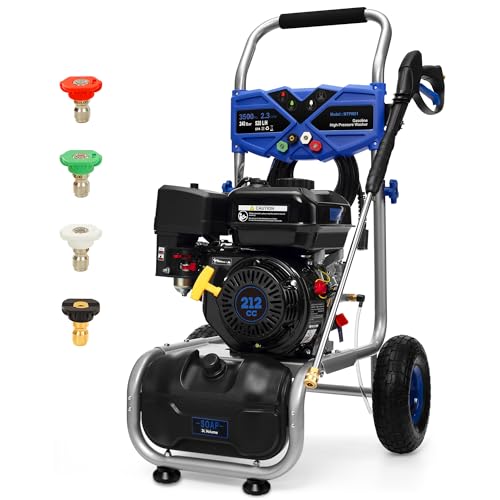
Most gas pressure washers come with a set of quick-connect nozzles (0°, 15°, 25°, 40°, and soap). These allow you to adjust the spray pattern for different tasks. Some models include a turbo nozzle, which rotates the water stream for faster cleaning on tough stains. Consider what’s included and whether you need additional accessories like a surface cleaner or extension wand.
For versatile cleaning, having a soap tank is a big plus. It lets you apply detergent directly, which is especially useful for removing mildew or grease. If you’re looking for a model with a soap tank and multiple nozzles, the Westinghouse WPX3200 Gas Pressure Washer is a solid option.
If you’re leaning toward an electric model for convenience, read our comparison of top electric pressure washers for siding to see how they stack up.
Final Thoughts
After evaluating the top gas pressure washers, we recommend the 4200 PSI 4.0 GPM Gas Pressure Washer for its exceptional power and value, ideal for heavy-duty residential cleaning. For professionals seeking a reliable workhorse, the Simpson PowerShot 4400 PSI Gas Pressure Washer stands out with its premium engine and triplex pump. Whichever you choose, a gas pressure washer will transform your outdoor cleaning tasks.
Frequently Asked Questions
What PSI do I need for a gas pressure washer?
For most home tasks like cleaning driveways, decks, and siding, a gas pressure washer with 3000 to 3500 PSI is sufficient. If you plan to strip paint or clean large concrete areas, consider 4000 PSI or higher for faster results.
Are gas pressure washers better than electric?
Gas pressure washers offer higher pressure and flow rates, making them more powerful and suitable for heavy-duty tasks. They are also portable and don’t require an electrical outlet, but they are louder, heavier, and require more maintenance. For lighter tasks, electric models are quieter and easier to use.
How do I maintain a gas pressure washer?
Regular maintenance includes checking the oil level before each use, changing the oil after the first 20 hours and then every 100 hours, and using fuel stabilizer if storing for more than 30 days. Also, inspect the hoses and connections for leaks, and clean the filters regularly.
Can I use a gas pressure washer on my car?
Yes, but you must use a wide-angle nozzle (like 40° or soap) and keep the nozzle moving to avoid damaging the paint. A lower pressure setting is ideal. For more tips, check our guide on pressure washers for cars.