
You have just moved into your first home or finally decided to tackle that grimy driveway and weathered deck. The spray from a garden hose just is not cutting it anymore. You need a machine that delivers real cleaning power without a steep learning curve or a massive investment. This guide is for homeowners and DIY enthusiasts looking for their first pressure washer. We have evaluated the market to find the best entry level pressure washer for 2026, focusing on models that balance performance, ease of use, and value. If you are curious about how electric models compare for everyday tasks, check out our overview of electric pressure washers for home cleaning.




Buying Guide
Power Source: Electric vs. Gas
The first major decision is between electric and gas power. Electric pressure washers, like the models from Greenworks and Westinghouse, are quieter, lighter, and require less maintenance. They start instantly with a trigger pull and are ideal for typical home tasks such as cleaning cars, patio furniture, and siding. Gas models, such as the Simpson and IvyBess units, offer higher pressure and flow rates, making them better suited for heavy-duty jobs like stripping paint or cleaning large concrete areas. For most entry-level users, an electric model is the most practical and user-friendly choice. For a deeper comparison, read our guide on budget-friendly gas pressure washers if you think you might need more power.
Pressure (PSI) and Flow Rate (GPM)
PSI (pounds per square inch) measures cleaning pressure, while GPM (gallons per minute) measures water flow. For entry-level cleaning, a unit with 2000 to 3000 PSI and 1.5 to 2.0 GPM is more than enough. The Greenworks 3000 PSI model delivers 3000 PSI and 2.0 GPM, which is certified by the PWMA to ensure you get the advertised power. The Simpson Clean Machine offers 3400 PSI and 2.5 GPM, giving it a slight edge for tougher grime. Remember, higher numbers are not always better for beginners; a balanced combination ensures effective cleaning without damaging surfaces.
Portability and Storage
Consider where you will store and use the pressure washer. Electric models are generally compact and lightweight, making them easy to carry around the house. The Westinghouse bundle, for example, includes a surface cleaner attachment but remains relatively portable. Gas models like the Simpson feature a welded steel frame with pneumatic wheels for easy movement across rough terrain. If you have limited storage space, look for units with onboard storage for hoses, nozzles, and accessories. For wall-mounted options, explore our picks for the best wall-mounted pressure washers.
Included Accessories and Versatility
A good entry-level pressure washer should come with a variety of nozzles and attachments to handle different tasks. Look for models with quick-connect nozzles (0°, 15°, 25°, 40°, and soap), a turbo nozzle, and a surface cleaner. The Greenworks 3000 PSI model includes five nozzle tips plus a turbo nozzle and a soap applicator, giving you versatility right out of the box. The Simpson Clean Machine also includes four quick-connect tips. The VEVOR surface cleaner attachment is a great addition if you plan to clean large flat areas like driveways and patios. For more tips on cleaning large areas, see our guide on the best pressure washer for large patios.
Final Thoughts
Choosing the best entry level pressure washer comes down to your specific cleaning needs and comfort with maintenance. For most homeowners, the Greenworks 3000 PSI (2.0 GPM Max) electric model offers an outstanding balance of power, ease of use, and value, making it our top recommendation for first-time buyers. If you anticipate tackling heavier jobs like restoring a large concrete driveway or removing old paint, the Simpson Clean Machine 3400 PSI Gas Pressure provides the extra muscle and durability you need, all while remaining approachable for a beginner.
Frequently Asked Questions
What PSI do I need for home use?
For typical home tasks like washing cars, cleaning decks, and removing dirt from siding, a pressure washer with 2000 to 3000 PSI is more than sufficient. Models like the Greenworks 3000 PSI provide excellent cleaning power without being overly aggressive. For a fuller picture of what to expect, check our article on pressure washers for house cleaning.
Are electric pressure washers as good as gas?
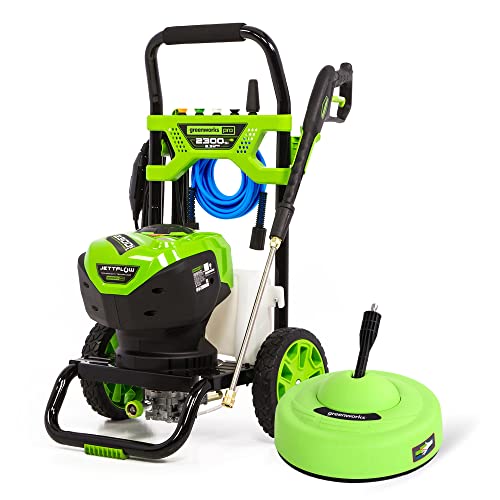
For most entry-level users, electric pressure washers are just as effective as gas models for routine cleaning. They are quieter, lighter, and require less maintenance. Gas models offer higher pressure and flow for heavy-duty jobs, but electric units like the Greenworks Pro 2300 Max PSI Brushless Electric are capable of handling almost any home cleaning task. The choice depends on your specific needs and how much power you require.
How do I maintain my pressure washer?
Proper maintenance extends the life of your pressure washer. For electric models, simply store them in a dry place and flush the system with fresh water after each use. For gas models, you need to change the oil, clean or replace the air filter, and drain the fuel if storing for more than 30 days. Always refer to the manufacturer’s instructions for your specific model. For more detailed advice, see our guide on Generac pressure washer carburetor maintenance.
Can I use a pressure washer to clean my car?
Yes, but you need to use the correct nozzle and technique. Use a wide-angle nozzle (40° or soap nozzle) and keep the wand at least 12 to 18 inches away from the car’s surface to avoid damaging the paint. Many electric pressure washers, like the Westinghouse Electric Pressure Washer Bundle, come with a soap nozzle and are gentle enough for automotive use. Always avoid direct spraying of sensitive areas like the engine or electrical components.