
You’re staring at a driveway that’s seen better days, with oil stains and grime that just won’t budge with a standard spray wand. You know a pressure washer surface cleaner can make the job faster and easier, but with so many options on the market, how do you choose the right one? This guide cuts through the noise to bring you the best power washer surface cleaners for 2026, covering everything from compact residential models to heavy-duty commercial units.
We’ve evaluated each product based on build quality, cleaning efficiency, and ease of use, so you can make an informed decision. Whether you’re a homeowner tackling weekend projects or a professional needing reliable equipment, we’ve got you covered. For more specific advice on cleaning concrete, check out our guide to the best concrete surface cleaners.



Buying Guide: What to Look For in a Power Washer Surface Cleaner
Choosing the right surface cleaner can transform your pressure washing experience. Here are the key factors to consider before you buy.
Cleaning Width and Nozzle Power
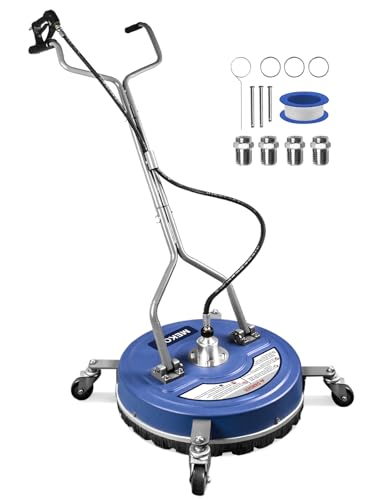
The cleaning width determines how much area you can cover per pass. A wider model, like the 24-inch or 30-inch options, is ideal for large driveways and commercial jobs. The nozzle power, measured in PSI and GPM, also matters. Look for dual rotating nozzles that provide a consistent, high-pressure spray to break up grime efficiently.
For most residential pressure washers, a 20-inch model with 4000 PSI is a sweet spot. But if you have a high-flow machine, a 30-inch unit can slash cleaning time. Always check your pressure washer’s GPM rating to ensure compatibility.
Build Quality and Materials
A surface cleaner is an investment, so you want one that lasts. Stainless steel housings are more durable and corrosion-resistant than plastic or PP materials. Sealed bearings are also crucial to prevent water from damaging the internal components, which extends the life of the tool.
Commercial-grade models, like the BE Power Equipment unit, are built to withstand heavy daily use. For lighter tasks, a reinforced PP material can still offer decent longevity, but be prepared for more wear and tear over time.
Ease of Use and Maneuverability
Look for features that reduce fatigue and improve control. A dual-handle design provides better stability than a single handle, especially when pushing over rough surfaces. Four swivel caster wheels help the cleaner glide smoothly and follow the contours of the ground without catching.
An adjustable handle and a trigger lock can also make long cleaning sessions more comfortable. These features let you maintain an upright posture and work hands-free when needed, which we appreciate during extensive projects. For more tips on accessories, see our surface cleaners category page.
Compatibility with Your Pressure Washer
Before buying, verify that the surface cleaner is compatible with your pressure washer’s flow rate and pressure output. Most models require a minimum of 2000 PSI and 2.0 GPM. The quick-connect fitting is standard, but you may need adapters for certain brands.
Also, consider whether you need a model that handles hot water. Some units are certified for hot water use, which can be a bonus for removing tough grease or oil stains. If you’re into auto detailing, you might also be interested in a foam cannon for auto detailing to complement your setup.
Final Thoughts
After reviewing the top contenders, the BE Power Equipment 24″ Whirl-A-Way Stainless Steel stands out for professionals who need commercial-grade durability and high-flow performance. For homeowners seeking a balance of affordability and efficiency, the RIDGE WASHER 20” Pressure Washer Surface Cleaner is a fantastic choice that delivers streak-free results on driveways and patios without breaking the bank.
Frequently Asked Questions
How does a power washer surface cleaner work?
A power washer surface cleaner uses two or more rotating high-pressure nozzles that spin rapidly under a shroud. This creates a consistent, even spray pattern that cleans a wide area without the streaks you often get from a handheld wand. The spinning action also helps to lift dirt and grime more effectively.
Can I use a surface cleaner on any type of surface?
Most surface cleaners are safe for concrete, asphalt, brick, pavers, and even wood decks. However, you should always check the manufacturer’s recommendations for your specific model. For delicate surfaces like wood, you may need to reduce the pressure or use a softer nozzle setting to avoid damage.
Do I need a special pressure washer for a surface cleaner?
No, but you do need a pressure washer that delivers enough flow and pressure. Most surface cleaners require at least 2000 PSI and 2.0 GPM to operate effectively. Check your pressure washer’s specifications to ensure compatibility. Some models include adapters to fit different quick-connect sizes.
How do I maintain my surface cleaner?
After each use, disconnect the surface cleaner and rinse it thoroughly with clean water to remove any debris or detergent residue. Periodically check the nozzles for clogs and replace them if worn. Lubricate the swivel joint and bearings as recommended by the manufacturer. Proper care will extend the life of your attachment significantly.